
Security Alert: Understanding the SecondFi Wallet Exploit
The Cardano ecosystem is facing a challenging week after a major security exploit targeted SecondFi, the popular self custodial neofinance platform formerly known as Yoroi wallet. The breach, which began unfolding on June 21, 2026, has rattled the community with estimated total losses climbing above $20 million.
While the numbers are alarming, there is a vital piece of context that every crypto holder needs to know: the Cardano blockchain itself remains completely secure. The issue did not stem from a flaw in Cardano's underlying network, but rather from a highly localized vulnerability within SecondFi's proprietary wallet generation software.
What Went Wrong under the Hood
Security analysts, including independent blockchain security firm SlowMist, traced the root cause of the attack back to weak randomness in the code SecondFi used to generate private cryptographic keys. In simple terms, the software created wallet addresses using a predictable pattern rather than true randomness.
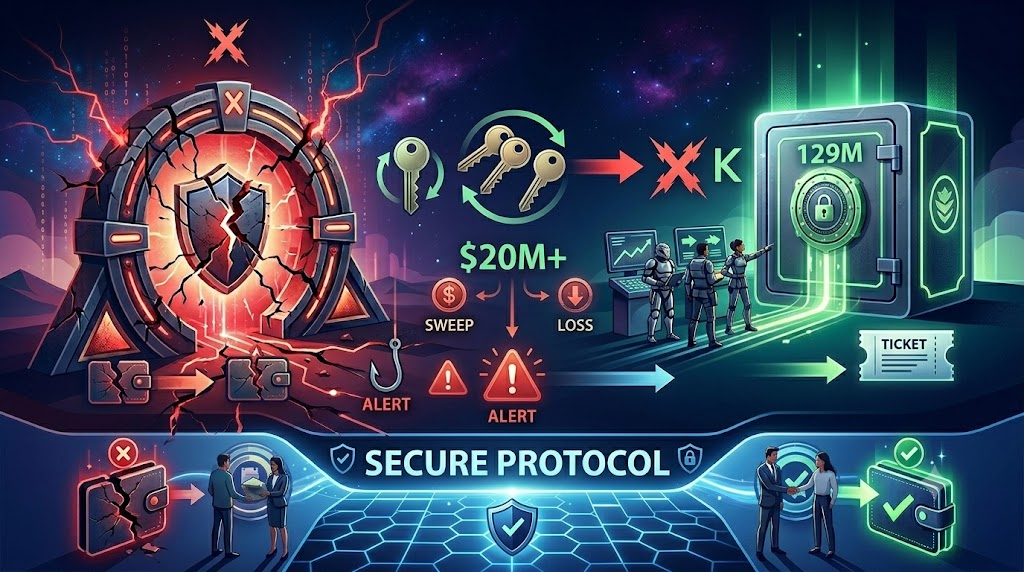
Because the generation logic was flawed, attackers were able to reverse engineer and recreate the private keys for thousands of user addresses. Armed with these keys, the exploiters bypassed normal security entirely and emptied dormant and active wallets one transaction at a time. The stolen funds, which included over 129 million ADA alongside thousands of other token types, were largely swept into a single onchain vault and routed through decentralized exchanges.
The Current Damage and the Rescue Effort
There is currently a discrepancy regarding the exact scale of the damage:
The External Drains: SecondFi's initial estimates focused on external drains, reporting a loss of roughly 16 million ADA, worth about $2.4 million, across several hundred addresses.
The Broader Scope: Independent analysis by SlowMist puts the total number of compromised tokens much higher, crossing the $20 million mark.
Fortunately, a massive portion of the vulnerable assets was intercepted. SecondFi announced that emergency measures successfully secured approximately 129 million ADA during the active exploit. These rescued funds are currently being routed to an independent, qualified third party custodian to safely hold them for affected wallet addresses.
Essential Steps for Affected Users
If you are a SecondFi user, navigating the aftermath requires careful attention to safety protocols, as fraudsters are actively attempting to impersonate support representatives. The team and ecosystem experts have issued explicit directions on how to protect your assets:
Do Not Reimport Your Seed Phrase: SecondFi has strongly warned users not to restore their existing recovery phrases into other Cardano wallet apps. Because the security risk is at the address level, importing the compromised seed phrase into a different application will not fix the issue. It simply exposes the exact same predictable private key to a different interface.
Move Funds to a Clean Slate: If you still have remaining funds in a SecondFi created address, security experts advise creating a brand new wallet with a completely fresh seed phrase using a trusted, unaffected software provider. You should then transfer your assets directly to that new, secure destination.
File an Official Claim: For users whose funds were swept or caught in the rescue pool, SecondFi has set up an official portal at support.secondfi.io to submit tickets, trace affected addresses, and begin the mitigation process.
Ecosystem founders have noted that while the technical reality points to an isolated software flaw rather than a blockchain failure, it is a sobering reminder of the constant vigilance required in web3 security. As SecondFi undergoes a comprehensive technical audit, the priority remains securing user assets and safely returning the rescued funds.